Europe has committed billions to replacing its aging firefighting fleet. The replacement planes won’t arrive until the next decade.
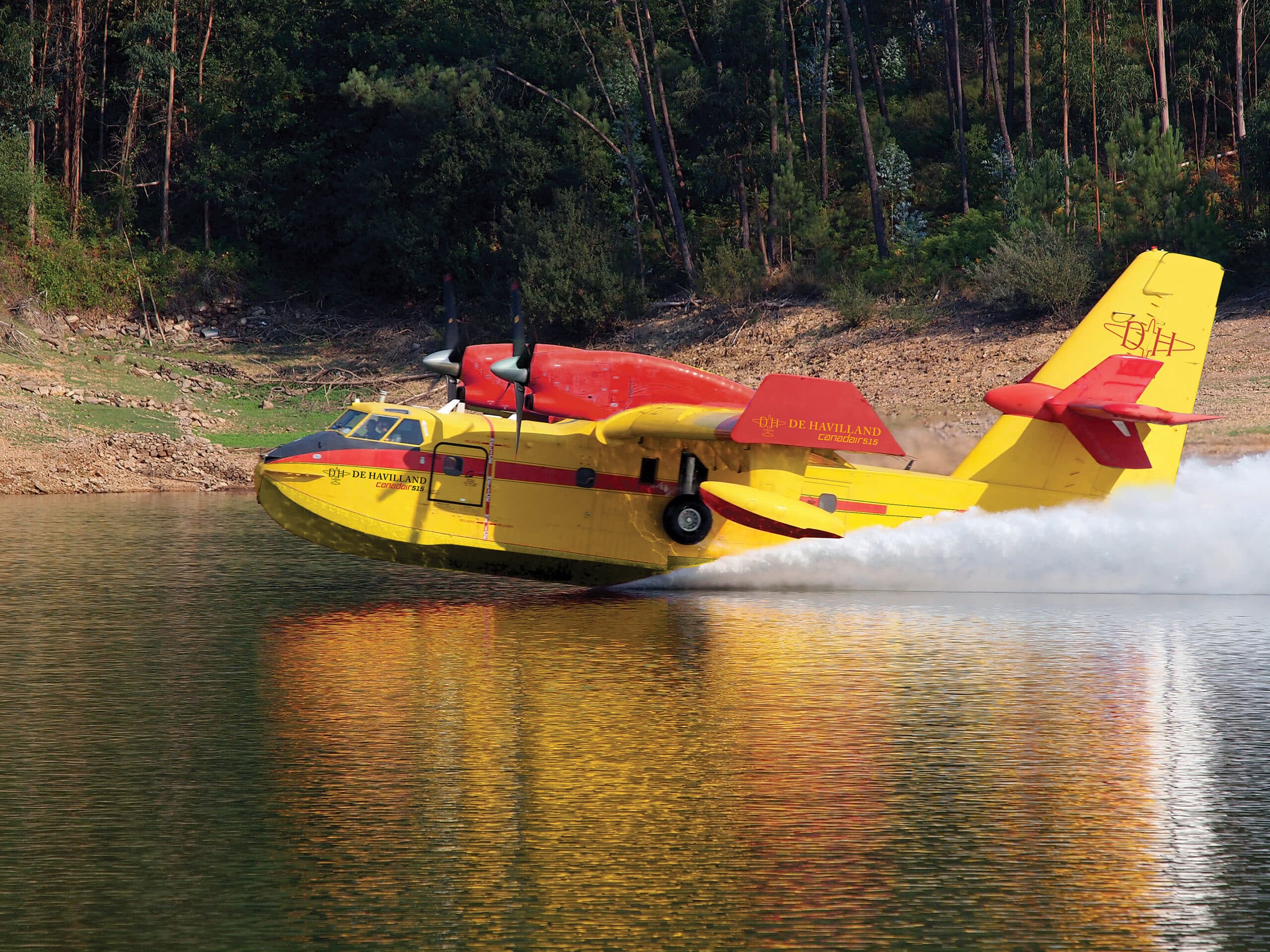
On June 4, French Interior Minister Laurent Nuñez flew to Nîmes-Garons Air Base and signed a contract for two additional De Havilland Canada DHC-515 water bombers. It was the kind of ceremony Europe does well: officials in front of aircraft, statements about readiness, the implicit message that the problem is being handled.

The DHC-515s Nuñez ordered will not fly over a Mediterranean fire until the early 2030s. Manufacturing backlogs at De Havilland Canada’s plant in Calgary have pushed delivery schedules out by years, a constraint buried in France’s own PLF 2026 budget documents. The contract is real. The aircraft are not yet.
This is the gap at the center of Europe’s wildfire strategy. Governments are signing deals for next-generation equipment while the fires burning this summer are being fought with aircraft that ceased production in 1990.
Old planes, harder work
The workhorse of Mediterranean aerial firefighting is the Canadair CL-215, a turboprop scooper that Greece, France, Spain, and Croatia all operate in various configurations. The youngest CL-215 still flying is 36 years old. The oldest are 57. By commercial aviation standards, these aircraft are well past their expected service lives, kept airworthy through maintenance programs that grow more expensive with each passing season.
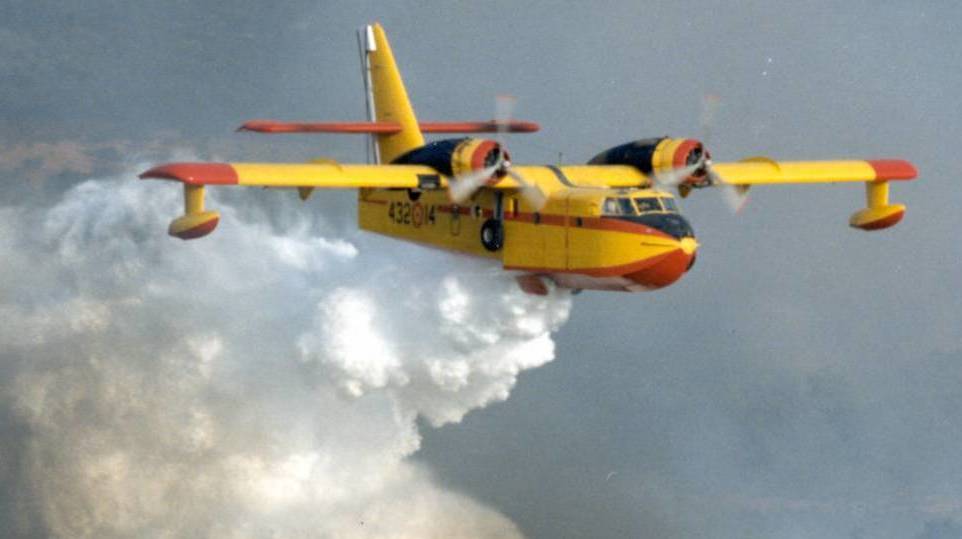
When wildfire broke out on the Greek island of Evia on June 20, authorities scrambled 14 aerial assets and flew them until nightfall. Three days later, the Loulé fire in Portugal’s Algarve was throwing spot fires 500 meters ahead of its main front, and 8 aircraft were committed on day one. The planes got there. What the operational logs don’t capture is what it costs, in parts, crew hours, and airframe wear, to sustain that pace on aircraft that are a generation old.
The European Court of Auditors noticed. Its Special Report 17/2026, published in March, flagged that long-term funding for maintaining resCEU stockpiles and fleets past the current budget cycle, which runs through 2027, remains unresolved. The court described it as a structural gap. It is.
The leasing problem
Two days before Nuñez signed the DHC-515 contract, Commissioner Hadja Lahbib announced what the European Commission called its largest-ever coordinated seasonal response: 22 airplanes, 5 helicopters, and 777 pre-positioned ground firefighters across six southern European nations.
“When every minute counts, being prepared saves lives, protects livelihoods, and preserves our environment.”
— Hadja Lahbib, EU Commissioner for Preparedness and Crisis Management, June 2, 2026

Three-quarters of the Union Civil Protection Mechanism’s 2021-2027 budget, €2.9 billion of €3.7 billion, funds the rescEU reserve that makes that deployment possible. Europe is not underspending on this problem.
But most of the aircraft deployed this summer are leased from private operators or borrowed from national inventories under bilateral agreements that expire when the season ends. When Evia and Loulé both needed aircraft in the same week, governments were competing for slots in the same small pool of privately owned scoopers. Lease rates move with demand, and so does availability.
What the satellites can’t do
Greece launched a more novel solution in May. A SpaceX Falcon 9 lifted four thermal imaging nanosatellites into low Earth orbit from Vandenberg Space Force Base, establishing a dedicated fire-detection constellation over Greek territory with hotspot resolution down to four meters.
“For the first time, an entire country is protected by a dedicated satellite constellation built to detect and track wildfires in real time. This is the blueprint for how nations can use space technology…”
— Martin Langer, CEO, OroraTech, May 3, 2026
The hardware works. The problem it can’t solve is what happens after a fire is detected. Greece’s Evia response required 14 aerial assets on a single fire on a single day. The country’s permanent national fleet, supplemented by four rescEU-assigned aircraft, was stretched to cover it. Faster detection accelerates the moment you discover the gap; it doesn’t close it.
Municipal fire services in high-risk zones like Crete aren’t helping matters. The average age of active personnel there runs close to 48, with some firefighters still on the line at 70. A satellite network that can spot a fire within minutes doesn’t compensate for a suppression force that is understaffed, aging, and drawing on the same strained budget.
The number to watch
The European Commission’s 2027 Draft Budget Estimates, due in the coming months, will be the first real test of whether Brussels has absorbed what this summer is showing. If the maintenance funding shortfall the Court of Auditors identified in March gets a structural fix rather than another emergency allocation, it will mean the Commission has privately concluded what the Nîmes-Garons ceremony obscured: buying planes that arrive in the 2030s does not protect the forests burning now. Keeping the current fleet serviceable until then is the actual problem, and right now it doesn’t have a budget line.
Sources
1. EU deploys largest ever wildfire response for 2026 summer. DG ECHO, June 2, 2026. https://civil-protection-humanitarian-aid.ec.europa.eu/news-stories/news/eu-deploys-largest-ever-wildfire-response-2026-summer-2026-06-02_en
2. Special report 17/2026: The Union Civil Protection Mechanism’s rescEU reserve. European Court of Auditors, March 2026. https://www.eca.europa.eu/en/publications/SR-2026-17
3. France orders two DHC-515 for Civil Security. AeroMorning, June 4, 2026. https://aeromorning.com/en/france-orders-two-dhc-515-for-civil-security/
4. Hellenic Fire System satellites launched for Greece. European Space Agency (ESA), May 3, 2026. https://www.esa.int/Applications/Observing_the_Earth/Hellenic_Fire_System_satellites_launched_for_Greece
5. Major wildfire breaks out in Loulé, forcing closure of EN2. Portugal Resident, June 23, 2026. https://www.portugalresident.com/major-wildfire-loule-en2-closed/
6. Global Aerial Firefighting Market Report. Dataintelo Market Intelligence, Early 2026. https://dataintelo.com/report/global-aerial-firefighting-market