
How South Korea’s MRO Unbundling Outmaneuvers the U.S. Defense Logistics Lock
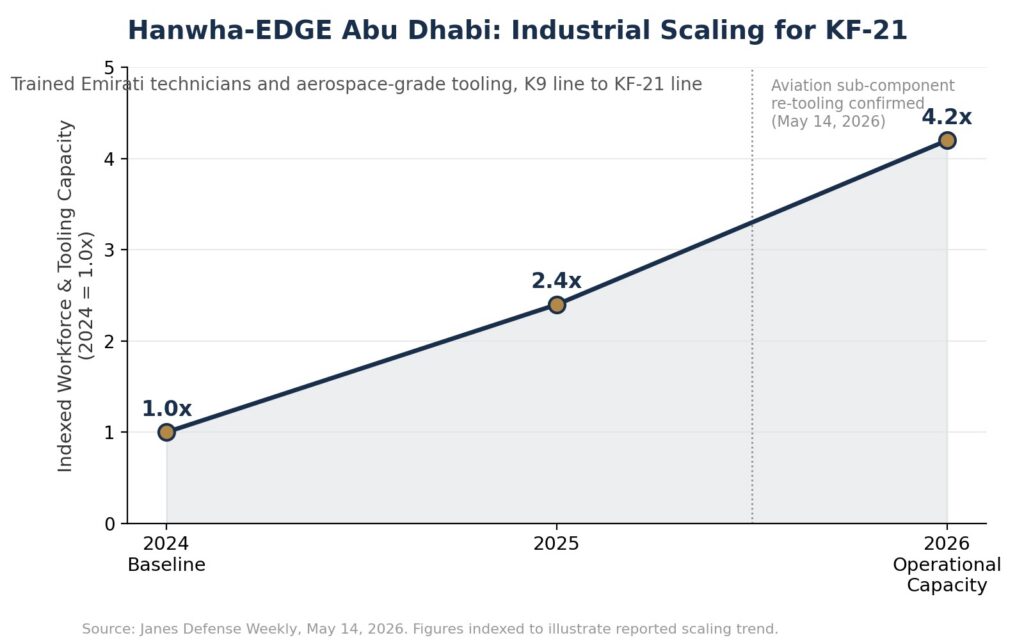
Sparks fly off a precision milling head on the floor of a retooled Hanwha Aerospace facility in Abu Dhabi. Six months ago, this line cast howitzer hulls. Now it’s cutting fuselage tooling for South Korea’s KF-21 fighter. In Seoul, a thousand miles away, officials at the Defense Acquisition Program Administration aren’t arguing about thrust ratios or radar signatures—instead, they’re negotiating who owns the repair manual.
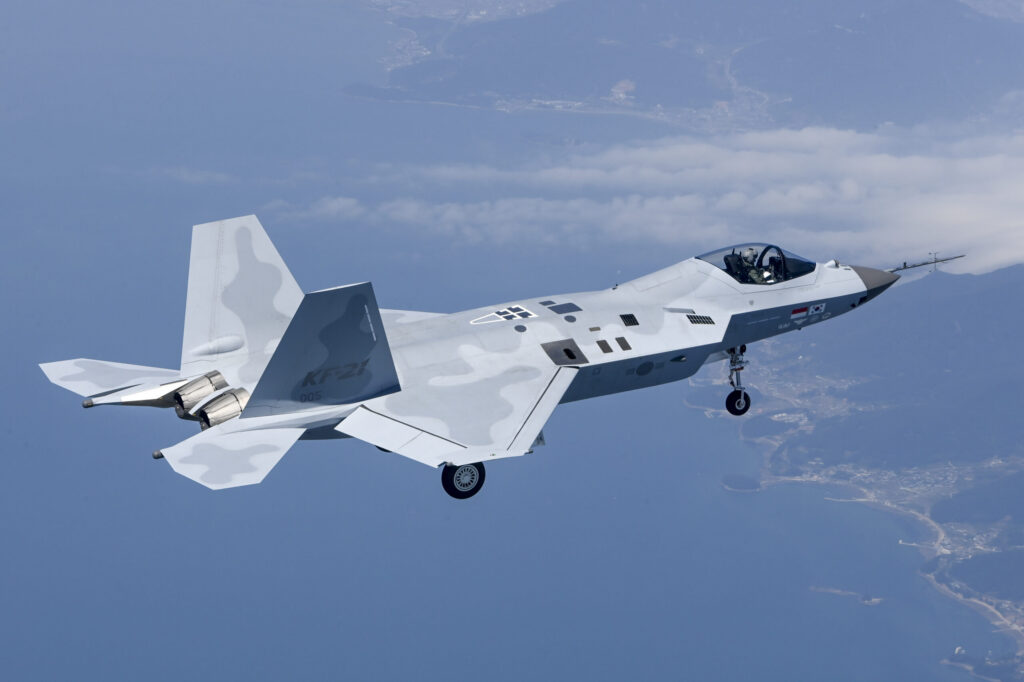
That’s the fight South Korea is winning. On March 11, DAPA finalized production contracts for the KF-21 Block I and, in the fine print, guaranteed something no American manufacturer has matched: full sovereign technology transfer for regional maintenance hubs built inside a buyer’s own borders. Source code included. Depot-level modification rights included. The authority to manufacture your own spare parts, without asking Seoul’s permission every time a part wears out.
The F-35 program, in contrast, works very differently. Parts, software updates and diagnostic data flow through a network Lockheed Martin and the U.S. government control, and every sale clears an ITAR review that can stall for political reasons that have nothing to do with the aircraft. Operators don’t own their maintenance stack but rather rent it. Michael Duffey, the Undersecretary of War for Acquisition and Sustainment, said as much in a December address, describing oversight bodies like DCMA as “a fulcrum as we balance change, speed and risk in acquisition reform.” He wasn’t wrong—in fact, he was clearly describing the leash.
A senior Emirati defense procurement official put the alternative more bluntly at a February briefing: “The structural autonomy of our defense production ecosystem depends entirely on ownership of the source code. By establishing a localized Tier-3 MRO hub in the Gulf, we are ensuring that operational availability is never subject to external political verification.” He’s describing a full depot capability on sovereign soil, immune to a foreign veto in a crisis. It’s what Abu Dhabi is actually paying for, and it matters more to a buyer than another tenth of a point on fuel burn.
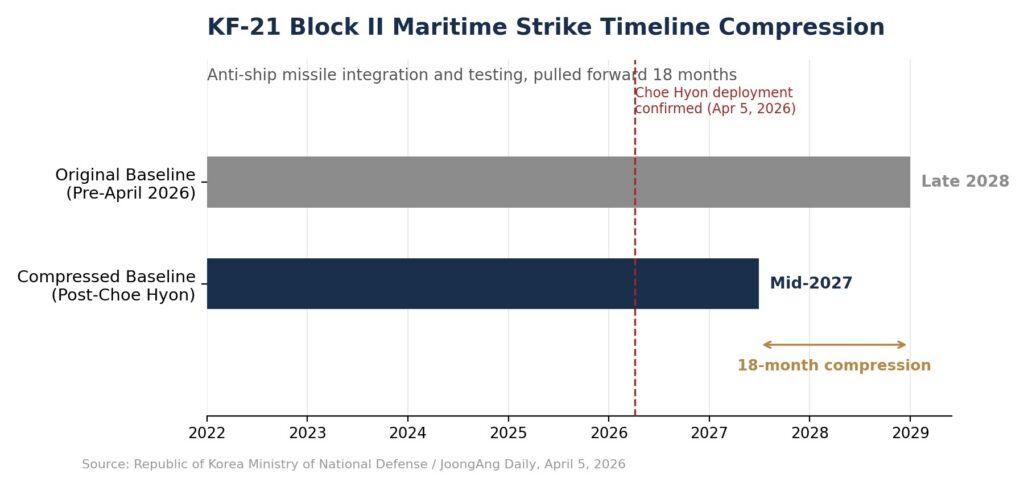
None of this happened by design alone. North Korea’s Choe Hyon, an advanced stealth guided-missile destroyer, blew a hole in South Korea’s own timeline. DAPA and the Republic of Korea Air Force compressed the KF-21 Block II’s maritime-strike development by 18 months, moving the operational target from late 2028 to mid-2027. The destroyer’s missile range changed the naval calculus in the Sea of Japan almost overnight.
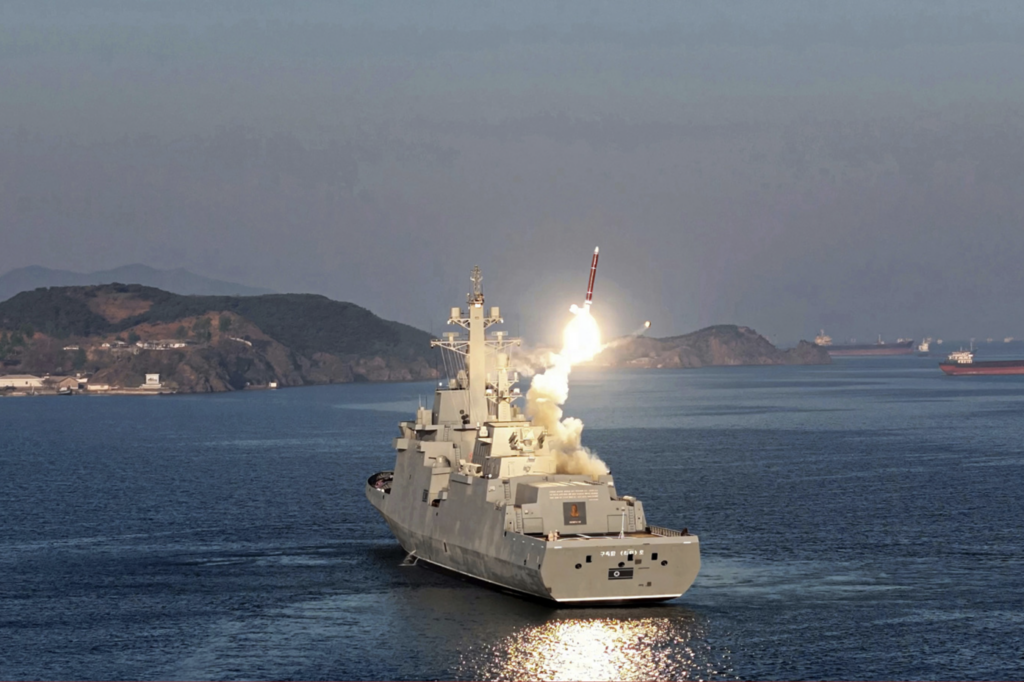
That emergency became a selling point. A maritime-strike fighter validated against a live stealth-destroyer threat, more than a year ahead of schedule, is a harder aircraft to wave off if you’re a Southeast Asian state watching your own waters get crowded. Add the “Space AI” architecture the Korea Institute for Defense Analyses detailed in January, which routes satellite data straight to the cockpit and lets pilots direct drone wingmen without relying on ground links an adversary can jam, and the KF-21 stops looking like a budget alternative to Western jets.
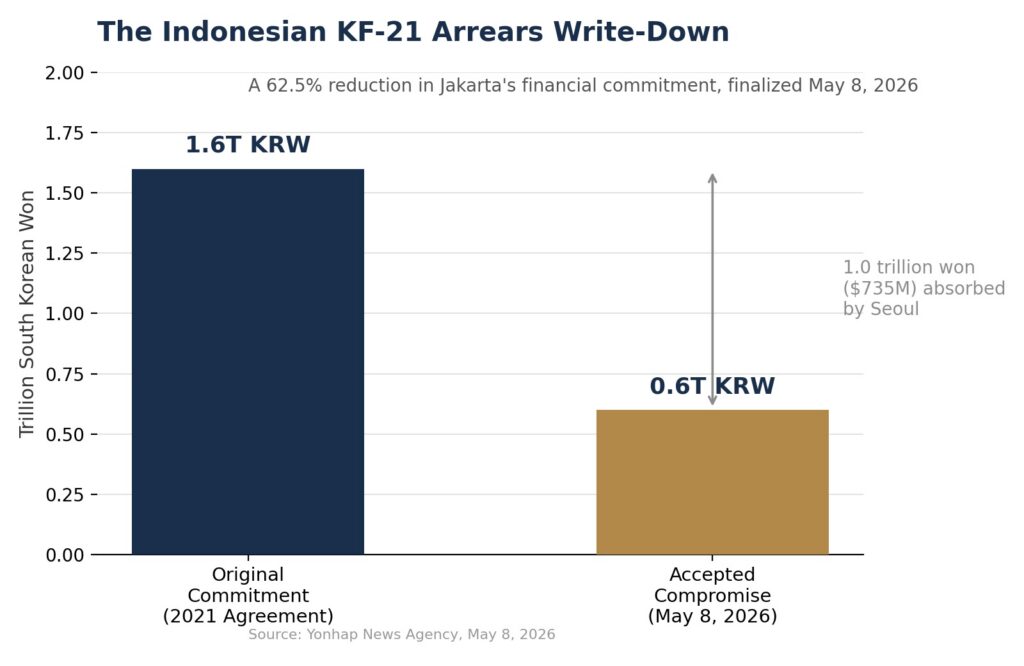
On May 8, Seoul closed out Indonesia’s long-running KF-21 payment dispute by accepting 600 billion won, about $440 million, down 62.5% from the original 1.6 trillion won commitment. That’s roughly $735 million South Korea simply absorbed into its own defense budget to keep Jakarta in the program and the assembly lines moving. In return, DAPA quietly cut how much prototype flight data and manufacturing know-how Indonesia actually gets. Jakarta got a cheaper jet with a shorter leash. Meanwhile, UAE is paying full price to have the leash removed entirely.
The skeptics have a real point. South Korea’s aerospace base still depends on machine tools and specialty chemicals from Japan and Europe, and a diplomatic rupture with either could choke production no matter what DAPA promises. But that risk sits a layer removed from what a buyer needs day to day. It affects South Korea’s capacity to build new jets over years, not a client’s ability to keep aircraft already on the ramp flying today.
Two dates will test whether Seoul can keep affording this strategy. South Korea’s National Assembly Defense Committee has an audit deadline in late 2026 that will force DAPA to justify the Indonesian write-down to lawmakers who never approved eating a trillion-won loss. And in September, the Goheung test range will host a live-fire demonstration of the satellite-linked wingman drone system, the first real proof that the Block III architecture works outside a briefing deck. If both go well, South Korea will have shown that giving away the logistics tail is a strategy, not a one-time concession. If either stumbles, Seoul will have found the edge of how much sovereignty it can afford to sell.
By the Numbers
The Indonesian arrears write-down: Seoul accepted 600 billion won, down 62.5% from the original 1.6 trillion won commitment, absorbing a 1.0 trillion won ($735 million) shortfall.
The Choe Hyon deployment compressed the KF-21 Block II maritime-strike timeline by 18 months, from a late-2028 baseline to mid-2027.
The Hanwha-EDGE Abu Dhabi facility scaled trained workforce and tooling capacity roughly fourfold between 2024 and 2026, moving from K9 howitzer production to KF-21 sub-components.
Sources
- Defense Acquisition Program Administration (DAPA), official release, March 11, 2026.
- Yonhap News Agency, Indonesian arrears settlement report, May 8, 2026.
- Republic of Korea Ministry of National Defense / The JoongAng Daily, April 5, 2026.
- Korea Institute for Defense Analyses (KIDA), Block III roadmap report, January 19, 2026.
- Janes Defense Weekly, Hanwha-EDGE industrial analysis, May 14, 2026.
- UAE Ministry of Defense / Emirates Defense Companies Council, joint statement, February 22, 2026.
- Michael Duffey, Undersecretary of War for Acquisition and Sustainment, official address, December 2025.